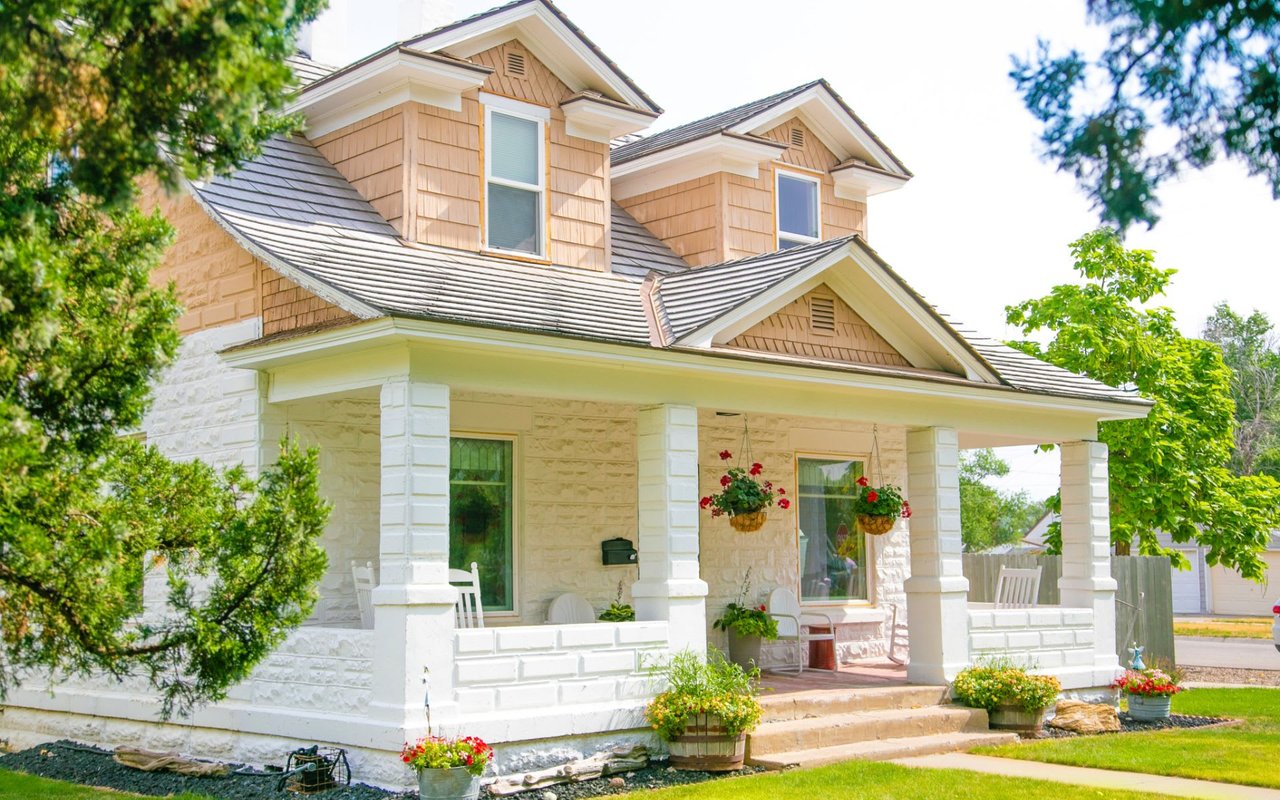
Wondering whether your Powell home still fits the way you live, or whether you have outgrown it? That question often starts small: crowded storage, a home office that doubles as a guest room, or a kitchen that feels tight when everyone is home at once. If you are weighing a renovation against a move to a larger home in Powell, this guide will help you look at the numbers, the lifestyle tradeoffs, and the local market signals so you can make a confident next step. Let’s dive in.
Powell move-up decisions start with space
In Powell, this is a practical question as much as an emotional one. The city’s estimated 2025 population reached 18,269, up 28.1% from 2020, and 27.6% of residents are under 18. With 88.0% owner occupancy, many households are not just passing through. They are staying, growing, and rethinking how much home they need.
That matters because a larger home is not always the only answer to feeling cramped. Sometimes the issue is layout, storage, or condition. Other times, you simply need more square footage, more bedrooms, or more separation between everyday living spaces.
Why Powell appeals to long-term owners
Powell offers amenities that support staying local even as your housing needs change. The city has 114 acres of parkland, seven parks, and 29 miles of interconnecting bike trails. For many homeowners, those features make the idea of moving up within Powell more appealing than leaving the area altogether.
The city is also served by Olentangy Local School District, which spans 95 square miles and reports that enrollment is expected to approach 30,000 by 2035-36. If you are trying to plan for the next five to ten years, it makes sense to consider how your next home may support changing daily routines, commuting patterns, and household space needs.
What the Powell market says now
If you are considering a move-up purchase, local pricing is the first reality check. Redfin reported a Powell median sale price of $649,611 for the three months ending May 2026, down 3.0% year over year. Homes sold in about 42 days, received 3 offers on average, and the market was still described as somewhat competitive.
That means buyers may have a little more breathing room than in a frenzied market, but desirable homes can still attract attention quickly. It is not a market where you can assume every larger home will sit for months waiting for a buyer.
Broader Central Ohio data points in a similar direction. Columbus REALTORS® reported 1.6 months of inventory in February 2026, which remained firmly in seller’s-market territory. Median days on market were 49, and Delaware County closings were up 13% year over year.
At the county level, Delaware County’s March 2026 State of the Market report said the 2025 median sale price was $510,000, the average sale price was $563,672, and average days on market were 33. The same report noted Delaware County remained the most expensive county in Ohio to buy a home on a per-home basis, even as price growth slowed.
When moving up may make sense
A larger home in Powell may be the better move if your current house has a true space deficit. That usually means your daily life is being limited by the home itself, not just by finishes or organization.
Common signs include:
- You need additional bedrooms that your current floor plan cannot reasonably create
- You need dedicated work or study space for multiple people
- Your main living areas feel consistently overcrowded
- Storage is inadequate even after thoughtful decluttering
- You want a different layout, such as more separation between living zones
- You expect your space needs to keep growing over the next several years
If those issues are structural to the home, a renovation may not fully solve the problem. Large additions can be expensive, disruptive, and less attractive from a resale standpoint than many homeowners expect.
When renovating may be smarter
If your frustration is mostly about finishes, function, or presentation, targeted updates may be easier to justify. The strongest local takeaway from the remodeling data is simple: when the problem is curb appeal, storage, or dated surfaces, strategic improvements tend to make more financial sense than major expansions.
The 2025 Columbus Cost vs Value report showed especially strong recoup rates for selective projects. Garage-door replacement returned 208.3% of cost recouped, steel entry doors returned 139.2%, minor kitchen remodels returned 89.5%, fiber-cement siding returned 84.5%, and midrange bath remodels returned 79.6%.
By comparison, larger projects were much weaker on resale recovery. A midrange major kitchen remodel recouped 49.7%, a midrange primary suite addition recouped 37.3%, and an upscale primary suite addition recouped 22.6%.
That does not mean you should never build an addition. It means you should view a large expansion primarily as a lifestyle decision, not as a strong resale investment.
A practical renovate-or-move test
If you are torn, use this simple test.
Renovate if your home needs better function
A renovation may be the better path if:
- Your location still works well for your life
- The lot and home style still fit your goals
- You mainly need cosmetic updates or modest reconfiguration
- Better storage, a refreshed kitchen, or improved baths would solve most frustrations
- You want to improve presentation and value before a future sale
Move if your home needs more capacity
A move-up purchase may be the better path if:
- You need significantly more square footage
- Your lot or home footprint limits expansion
- The number of bedrooms or workspaces is no longer workable
- You want a different overall layout, not just better finishes
- The cost of major additions does not align with likely resale recovery
Run the numbers before you decide
Emotion often drives the question, but math should guide the answer. In Powell, the 2025 median value of owner-occupied housing units was $561,500, while the latest Redfin median sale price was $649,611. Those figures can serve as a starting point for estimating what your current home may contribute toward a move-up purchase.
From there, compare two budgets side by side:
- The likely net proceeds from selling your current home
- The total cost of buying a larger home, including monthly carrying costs
- The budget for renovating your existing home to meet your needs
The monthly payment is only part of the picture. Delaware County’s auditor notes that tax rates vary by district, so property taxes can shift meaningfully even within the Powell area. When you move to a larger home, the tax bill may change enough to affect your true monthly comfort level.
Condition still matters in today’s market
Even if your goal is to buy bigger, your current home still needs to compete well when it hits the market. The 2025 Remodeling Impact Report found that 46% of home buyers are less willing to compromise on home condition. That is an important reminder for Powell sellers who want to preserve leverage when they list.
The same report found that REALTORS® most often recommend painting the entire home, painting one room, and replacing the roof before selling. Those are not flashy projects, but they can improve presentation, reduce buyer objections, and support a smoother sale.
For many move-up sellers, the best path is not a full overhaul. It is a focused plan that improves condition, sharpens design, and helps the home show at its best without overspending.
How to think like a move-up seller
If you are planning to sell and buy, timing and preparation matter. You want your current home positioned to attract strong interest while keeping your next move realistic and financially comfortable.
A smart move-up strategy often includes:
- Estimating your current home’s likely sale range
- Identifying updates that can improve marketability
- Prioritizing high-impact projects over expensive overbuilds
- Reviewing carrying costs for the next purchase, including taxes
- Defining the non-negotiables your next home must solve
This is where an integrated approach can make a difference. Instead of treating the sale, prep work, design decisions, and next purchase as separate projects, it helps to evaluate them together.
The Powell answer is personal, but the framework is clear
There is no one-size-fits-all answer to whether it is time to move up to a larger home in Powell. If your home’s limitations are mostly cosmetic or functional, targeted improvements may give you a better return and a better living experience. If your household truly needs more capacity, a larger home may be the more practical long-term solution.
The key is to separate a space problem from a finish problem. Once you know which one you actually have, the decision becomes much clearer.
If you want help evaluating whether to renovate before selling, list as-is, or move up within Powell, Nth Degree can help you look at the home, the market, and the numbers as one connected plan.
FAQs
Should you renovate or move to a larger home in Powell?
- If your main issue is outdated finishes, storage, or curb appeal, targeted renovation may make more sense. If you have a true square-footage or layout shortage, moving up is often the stronger solution.
What is the current home price trend in Powell, OH?
- Redfin reported a median sale price of $649,611 in Powell for the three months ending May 2026, which was down 3.0% year over year.
Is Powell still a competitive market for move-up buyers?
- Yes. Redfin described Powell as somewhat competitive, and Columbus REALTORS® reported Central Ohio remained in seller’s-market territory with 1.6 months of inventory in February 2026.
Which home improvements offer stronger resale value near Powell?
- The 2025 Columbus Cost vs Value report showed strong recoup rates for garage-door replacement, steel entry doors, minor kitchen remodels, fiber-cement siding, and midrange bath remodels.
Do property taxes matter when moving to a larger home in Powell?
- Yes. Delaware County tax rates vary by district, so a larger home can change your monthly carrying cost even if the purchase price feels manageable.
What makes Powell appealing for long-term homeowners?
- Powell offers 114 acres of parkland, seven parks, 29 miles of interconnecting bike trails, and a high owner-occupancy rate, all of which support long-term living and move-up demand within the area.