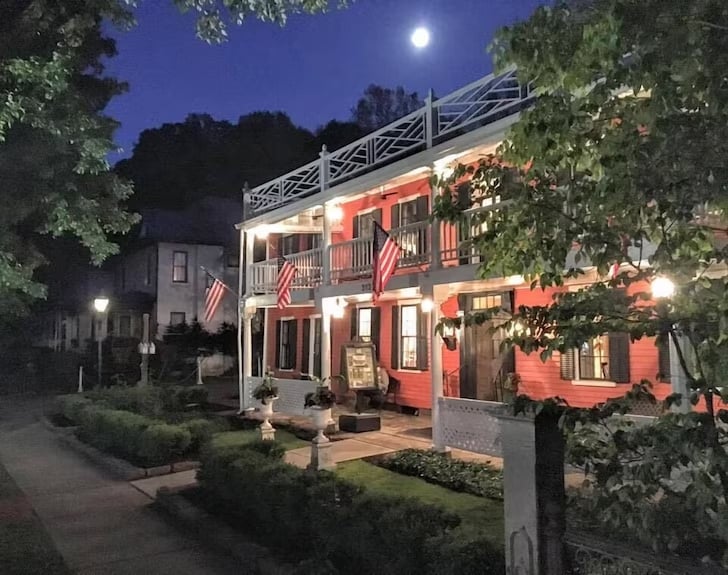
"You are destroying historic fabric, replacing with something that's new, and has no justification or grounds for it being changed that way." Commissioner Edward Thiell said that at the German Village Commission's October 7 hearing, according to Columbus Underground. He was talking about the front windows of The Old Mohawk at 819 Mohawk St.
The restaurant changed hands this summer, and every exterior change the new owner proposes needs the commission's sign-off. At that October hearing, commissioners approved a single-story addition on the south side and dormers as amended, and sent the Mohawk Street storefront back for redesign.
What $1.7 Million Bought
614NOW reported on July 30 that NCR Ventures, the restaurant group of Lindey's co-owner Rick Doody, bought The Old Mohawk for $1.7 million from longtime owner Michael Reames. Doody told the outlet he expected multimillion-dollar historic renovations. He also said he was keeping the staff and would make changes gradually. NCR has said it doesn't plan any internal changes soon, and that includes the menu, according to Columbus Underground.
The building's history explains why every exterior change gets a close look. German sailor Ferdinand Thomas opened it as a general store in 1906, and it has been a restaurant since 1933. In an August 14 interview with 614NOW, Doody said the building needed major work on its building systems. He said the addition would go on the grass lot to the south and add dining, patio and basement space.
The interior, the staff and the menu were part of the sale. The exterior has to go through the commission.
How the Plan Moved, Hearing by Hearing
The renovation has gone through two commission hearings in five weeks, and the plan changed along the way.
- August 25. NBC4 described Design Collective's proposal: a 473-square-foot first-floor addition, a 500-square-foot basement expansion, a 330-square-foot larger patio, dormers, a new south-facing window, and facade changes.
- September 2. The application was heard as a conceptual review. No action was taken. Commissioners asked for smaller dormers, raised concerns about how the dormers sat against the chimneys, and asked whether the storefront windows are original.
- October 7. The commission split the application in two. It approved the rear addition and the dormers as amended, and continued review of the storefront, according to Pique.
- October 15. Columbus Underground's write-up put the expansion at about 1,460 square feet in total. That includes roughly 550 square feet on the first floor and more than 300 square feet of patio, bringing the interior to a little over 8,100 square feet and the patio to 637.
The first-floor addition grew from 473 square feet in the August proposal to about 550 by the October hearing, and the commission approved that larger addition while objecting to new openings in the south brick wall and to changes to the original storefront.
Why the Back Moved and the Front Didn't
The City of Columbus describes the German Village Commission's job this way: it reviews applications and issues Certificates of Appropriateness for exterior alterations in the historic district, with a duty to preserve, protect and enhance its architectural and historic features. The Old Mohawk shows how that works in practice.
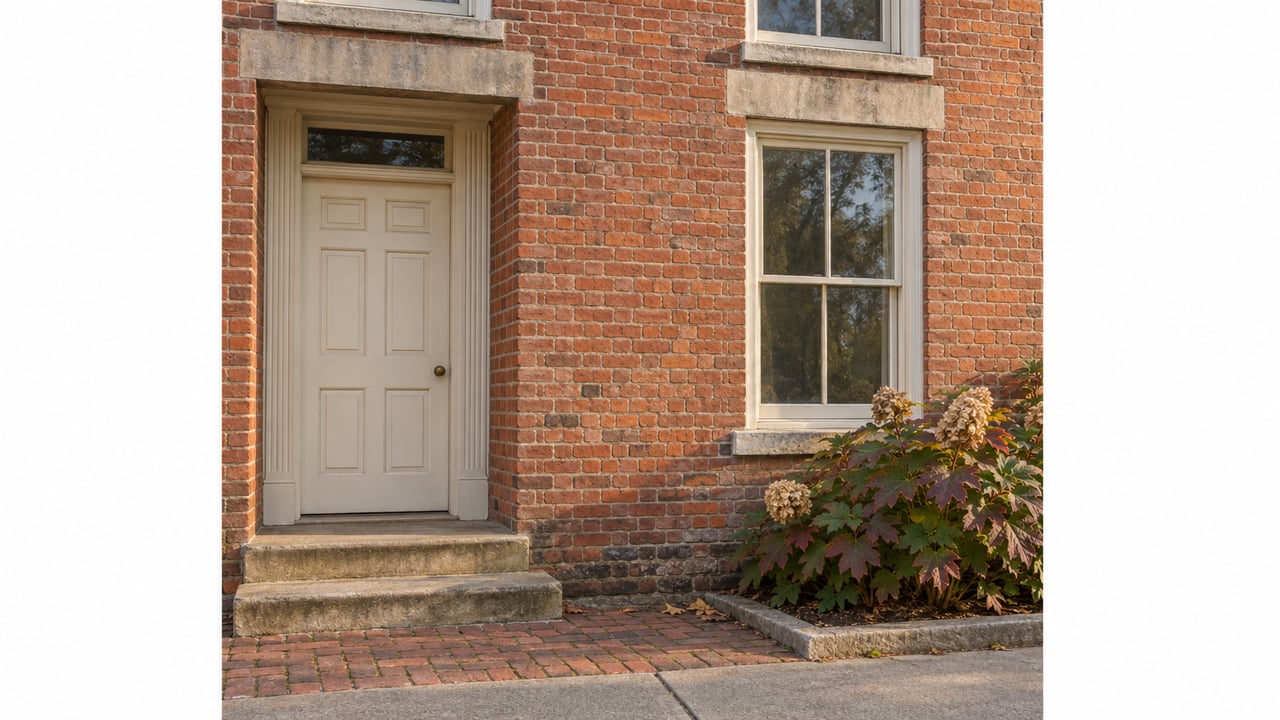
Pique's account, which is based on the meeting video, says commissioners objected to two things. One was changing the original first-floor storefront on Mohawk Street. The other was cutting new window openings into the intact south brick wall along East Kossuth Street. The single-story rear addition was approved partly to protect that original brickwork. The storefront was sent back for a redesign that follows National Park Service Preservation Brief 11, the federal guidance on rehabilitating historic storefronts. Columbus Underground described the same outcome as a denial of the request to replace the front windows with uniform ones. The two outlets agree on the substance. As of mid-October, the storefront facing Mohawk Street had no approved change.
The commission had laid out its position in September. The minutes summary in the city's October agenda reads:
The storefront windows would need to be investigated if they are the original windows. If they are, the Commission supports their retention. If there is evidence that the windows historically opened the Commission could consider that style.
The same summary includes other comments from that hearing. Commissioners said paint removal would have to follow National Park Service cleaning guidance, with a test site completed before any full removal was approved. They said any repair work should use the correct mortar. They also noted the brick appeared to be covered in an asphalt material and that leaving it covered might be the better choice, since the covering may have been put on to fix a problem in the first place.
The Same Method, Applied Elsewhere This Year
The Old Mohawk isn't the only exterior project the commission took up in 2026, and it isn't the first one involving Doody. Lindey's, at 169 E. Beck St., got unanimous approval on July 1 to renovate its second-floor patio with new decking, fresh paint and the removal of its French doors, according to 614NOW. The article said the start date was unclear. That was a contained change to an existing outdoor space, and it passed in one hearing.
The biggest project on the commission's 2026 docket went through the same step-by-step process. On September 2, the same night as The Old Mohawk's first hearing, Cedar Square's mixed-use redevelopment received a 3–2 conceptual approval, according to Columbus Underground. The plan is a three-story, 52-unit development. It would demolish the 1980s office building at 251 E. Livingston St. and keep the Bendi Wok building and the neighboring historic structures. Exterior materials and details still have to come back for review.
Across all three projects, the commission approved the parts that leave historic material intact first and asked for more on the parts that touch it. The Old Mohawk followed that order.
What Opened While the Hearings Went On
The 2026 changes that have already opened in German Village happened inside existing storefronts.
Skillet closed at 410 E. Whittier St. in February after more than 15 years. In late August, Becker Nezballa opened The BeckFast Place in the same space. He told Columbus Underground he found the vacancy while walking his dog. Coffee service started first. The limited food menu started August 26, with items like the Cheesy Leek Grilled Cheese and the Build-Your-Own Beckfast Burrito. The front room has about five tables of three seats each, and there's more seating in back. BeckFast is open Wednesday through Monday, 7 a.m. to 2 p.m.
At 702 S. High St., the former Daily Growler reopened after renovations as The Daily Etcetera, which combines The Daily Growler and The Daily Bar. Columbus Underground reported a public opening date of June 19.
From Skillet's closing to BeckFast's food menu took about six months. The Old Mohawk was sold in July and still had its storefront under review in October.
On the Calendar
- November 10, 6 p.m. The German Village Society Board holds a public meeting.
- November 20. Last day to order a holiday dinner from The Farmer's Larder, the grocery from WIT Farm owner Jamie Pritchard at 900 S. High St.
- November 21. The Farmer's Larder's grand opening, according to its website. The store lists hours of 10 a.m. to 7 p.m. daily.
- December 6, 4 to 8 p.m. Village Lights, hosted by the German Village Society.
The Old Mohawk still has to return to the commission with an updated dormer plan and a storefront redesign. Those hearings will decide what the Mohawk Street side of the building looks like.
This post is general information and not legal advice. If you're planning exterior work on a property in the district, confirm your own requirements with the city's Historic Preservation Office or a qualified professional.
Updating an older home in German Village starts with knowing what the commission is likely to approve. The Nth Degree Team puts brokerage, design and renovation management on one team, so plans for a historic exterior can be shaped to fit German Village's guidelines from the start. Start your home transformation with a conversation about what your property can become.